
pre-flight
Please inform the THAI Customer Contact Center of the infant’s or pregnancy details when booking. This is to ensure proper seating arrangements on board and to allow us to prepare any necessary facilities.
ConditionS FOR TRAVELING WITH INFANTS
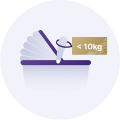
Bassinet
Weighing less than 10 kg and not
exceeding 67 cm in length

FAA-approved car seat

Babies and Toddlers
Travelling While Pregnant
General Recommendations
Most women with an uncomplicated pregnancy can travel by air. However, the early weeks of pregnancy may involve a slight risk of hypoxia, and frequent flying is best avoided at the beginning of pregnancy.
Medical Certificate Requirements
A medical certificate is required after the 28th week of pregnancy.
The certificate must confirm the expected due date and state that the pregnancy is progressing normally.
It must be issued no more than 7 days prior to the first flight in the itinerary. Only original paper certificates are accepted – digital certificates are not permitted.
In cases of complicated pregnancies or multiple pregnancies (e.g. twins), medical clearance from the airline is required.
Flight Duration Limits
For flights shorter than 4 hours: travel is permitted up to 36 weeks.
For flights longer than 4 hours: travel is permitted up to 34 weeks.
Travel is not permitted after 36 weeks of pregnancy.
After a Caesarean Section
Following an uncomplicated caesarean section, travel may be permitted no earlier than 7 days after delivery.
Other Information
A wheelchair can be arranged for added comfort.
When booking, it is recommended to provide the expected due date.
additional INFORMATION
- Move your legs frequently during the flight to reduce the risk of blood clots.
- Drink plenty of water to avoid dehydration.
- Inform the cabin crew about your pregnancy so they can assist you if needed.
- Bring comfortable clothing and footwear to make the journey easier.
- Avoid heavy lifting and strenuous activities before and after the flight.
* Passengers are responsible for providing approved car seats (Child Restraint System - CRS).
Note: On the Boeing 787-9 (cabin versions 7891 and 78W1), the Business Class Seats are equipped with airbag seat belts. A Business class passenger who travels with a lap-held infant is accepted to travel by using infant loop belt provided onboard.
- Prepare adequate clothing to keep the infant warm in the plane.
- Air travel is not recommended for infants during the first week of life, when a newborn’s body is still adjusting to life outside the uterus and to assure that the child is healthy and free of congenital defects. Healthy infants 14 days of age are acceptable to travel with an adult passenger.
- Changing cabin pressure cause temporary changes in middle ear pressure, which can result in pain. To minimize this, it is helpful to have a infant nurse a bottle, breast or suck on a pacifier (older children may drink from a cup or chew gum) particularly during descent. This will help equalize the air pressure in the middle ear.